
With tighter emissions norms and increased focus on greener technologies almost every car manufacturer is busy developing an alternate to the conventional petrol and diesel powertrains. When Toyota launched the Prius selling hybrids was not a bold but revolutionary statement. More than that, the Prius showed the company’s commitment to bringing in more advanced and efficient automobile technology to the masses. Understandably, in a world accustomed to driving petrol and diesel cars, the Prius’ revolutionary petrol and electric power caused quite a stir. Up until this point, manufacturers had endeavoured for decades to harness the two energy sources into cars – and for decades they’d failed. In 1997 however, Toyota were the first to successfully overcome the many engineering challenges and subsequently launched the Prius, the world’s first mass market hybrid.

With the growing awareness of hybrids and EV’s, the outlook towards such offerings has also changed. And this is evident by the sizeable number of Hybrids now sold in the UK. Toyota has now brought in the new-generation avatar of the Prius with a new design language and more efficient tech under the skin, the original poster boy of hybrids looks all set to mark its niche.
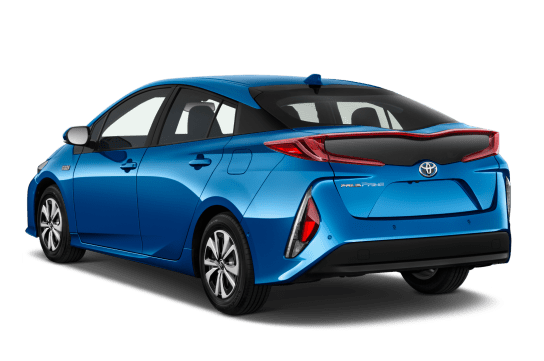
The new-gen Toyota Prius has received a smart makeover which makes it a lot sharper than before. It still remains a unique-looking automobile on the road. I wasn’t too convinced about this design when I saw the images but in flesh it looks a lot more appealing than the previous model. The front now carries an aggressive design which can be seen by the sharp lines of the headlight along with the multiple creases on the front bumper. The air vents on the bumper aren’t just for aesthetics as the grille shutter actually controls the airflow into the engine.
Toyota has retained the overall silhouette of the previous car, but at the same time made it more aerodynamic. The height has been dropped by 20mm while the position of the spoiler has been lowered too. Collectively, it has improved the coefficient of drag to 0.24, which is better than in a Nissan GT-R. The new Toyota Prius is also longer and wider than its predecessor. Past the B-Pillar, it gets multiple crease lines with the most prominent one being the rising waistline.
Step inside the new Prius and you’ll wonder if the car is still in its concept stage. And that’s because the cabin layout has got a serious overhaul from the earlier iteration. Instead of the vanilla themed dashboard, it gets a two-tone design that flows along the width of the car before blending in with the door panels. The AC vents with the contrasting detailing are a nice touch too.
Toyota has played it smart with the overall cabin design. It looks upmarket and at the same time utilises the space in the best way possible. There is an independent stack under the central unit that features drive mode buttons, a gear selector as well as a park button. Additionally, the central tray positioned between the seats comes with a wireless charger, two cup holders and a large storage box under the armrest.
The light colours in the Toyota Prius’ cabin give it an airy and spacious feel. Adding to that are the comfortable seats. While the front and rear seats come with adequate cushioning, the under thigh support for the rear passengers could have been better. Legroom is decent in both zones but the sloping roofline could make taller rear occupants feel a bit crammed.
The new-gen Toyota Prius retains the 1.8-litre 4-cylinder petrol motor from its predecessor that makes 98PS and generates 142Nm of torque. On the electric front, it features a 72PS/163Nm motor. The combined system output is rated at 122PS. While these figures are similar to the previous car, what has changed significantly is the response from the hybrid system. When you turn on the ignition, the petrol motor isn’t fired up. Instead, it will run purely on the electric motor till 60kmph if you’re not too aggressive with the throttle, which is ideal in slow-moving traffic. However, step on it, and the petrol motor quickly springs to life and gives you the necessary push.
The Toyota Prius features three driving modes — Normal, Power and Eco — and the difference in each of these is quite evident. On start-up, the Normal mode is activated by default and it will summon the petrol engine the moment the battery charge is low or when the car exceeds 60kmph. In Eco mode, the throttle response is toned down and so is the air-conditioning to improve the fuel efficiency. This is ideal for driving in bumper-to-bumper traffic. The reduced throttle response doesn’t make the car feel sluggish, as electric motor produces sufficient torque immediately.
Once on an open stretch, shift into Power mode and the transitions between the modes is smooth and so is the shift from pure EV mode to when the petrol motor comes to life. In power mode, the AC unit’s performance isn’t affected and the petrol motor is working in full swing. Undoubtedly, this remained my pick among the three settings as the system felt more spirited and enthusiastic to perform quick turns. Additionally, the car reaches higher speeds without much effort in this mode.
The highlight of the new-gen Prius is the Toyota New Global Architecture (TNGA) platform with its lowered centre of gravity and updated suspension package. The benefits of this can be felt in the impressive ride quality. Even though the new-gen Toyota Prius looks large in dimensions, driving it in the city in peak traffic is very convenient, thanks to its compact dimensions. Helping its cause is the steering wheel that rightly weighs up as the speeds increase. The small turning radius makes it easy to manoeuvre in tight parking situations.
However, the biggest talking point of the new Prius is its suspension setup which will be thoroughly enjoyed by all the occupants in the car. The front wheels get McPherson struts while the rear comes with a new double wishbone arrangement. The setup is tuned to offer a softer ride which irons out the uneven undulations without any effort. The setup is rightly damped as the ride is almost unaffected while driving over speed bumps. On certain rough sections, the cabin was left suitably isolated from the disturbances caused by the tarmac. As is typical of a Prius, the cabin is quite silent and the suspension does its bit by remaining quiet even over rough patches.
Fortunately, the softer ride quality has not affected the way the Prius handles quick direction changes. It performs them without any discomfort. However, the Bridgestone tyres that come on the Prius aren’t the best when it comes to gripping the surface. These are low rolling-resistance tyres that have been designed for fuel efficiency and not for corner-carving performance. But on straight sections, the Prius feels stable while travelling at higher speeds.
Toyota is going strong when it comes to hybrid cars, as the company has sold over 10.05 million units globally till January 2017, with over 40 per cent of those wearing a Prius badge. The Japanese car manufacturer claims to have reduced 77 million tons of CO2 emissions over the years. By 2020, Toyota aims to make hybrids amount to 20 per cent of its overall sales which, at present, stands at two per cent.
If you are out to make a green statement to the world, the Toyota Prius is your best bet.
 Elliott On Air