
Between 2016 and 2022 Aston Martin has a plan to launch no less than seven new models, all far more differentiated from each other than the cars it currently builds. You know how it is: the Vantage looks a bit like the Vanquish and does a similar thing to the DB9.
Well, all that changes with the DB9’s replacement, the Aston Martin DB11. It sits on a new aluminium chassis, which, from a technical standpoint, has fewer extrusions and more pressings. From a practical standpoint what that actually means is it’s more space efficient; the car is a similar size to its predecessors on the outside, but roomier inside. That’s good news, as roominess is something previous Astons have not been renowned for.
The DB11 does pick up on small bumps, but it’s just about comfortable enough for such a sporty car, and its body control is excellent, especially compared with the floatiness you feel in a Bentley Continental GT.
Over bigger dips and crests this gives the car great stability and ensures you have complete confidence in how it will react. What’s more, the rear-wheel-drive DB11 remains flat and composed during cornering, and, for a car that weighs well over 1800kg, it’s also surprisingly agile. That agility is also due to some clever electronics on the suspension, with a system that can pull a rear inside brake to help the DB11 turn faster, allied to much quicker steering than any Aston has had before.

The DB11 still remains impressively stable at motorway speeds, though, leaving you to relax and enjoy its engine thrumming away quietly in front of you. Ask more of the big V12 and, unsurprisingly, it has power and torque to spare. When you put your foot on the accelerator at low revs there’s a tiny pause through the eight-speed automatic gearbox while you wait for the twin turbos to start working. Even then, a car that makes 516lb ft of shove from 1500rpm, and 600bhp further up the scale, is never going to feel flat, and the reality is there’s effortless pace available all the time, right in keeping with the nature of this car and Aston Martin tradition. Furthermore, the noise it makes when offering all this performance is one of the greatest sounds produced by any car.
Our test car did have a couple of minor issues: at speed, one had some excessive wind noise, and the other a little too much road noise. Without these – and we were assured that the full production models will come without such foibles – you could add a quiet and relaxed driving experience to the DB11’s list of exceptional attributes.
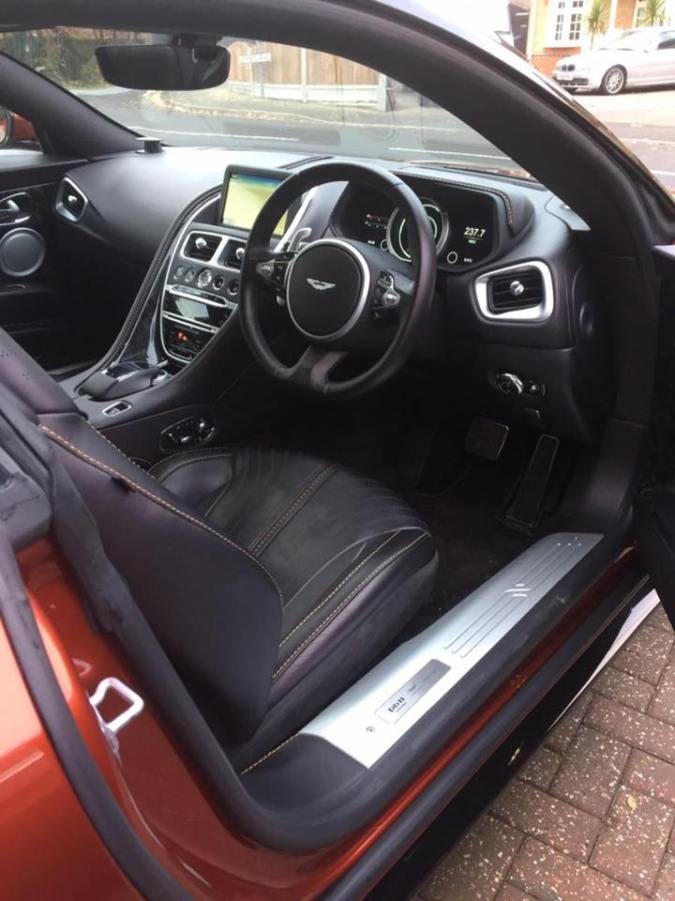
All shapes and sizes of driver should find it easy to get comfortable thanks to a wide range of electronic steering wheel and seat adjustment, including adjustable lumbar support.
Fit and finish retain the best bits of Astons of old – that handcrafted effect on the leather – but marries it, finally, with modern electronic features, such as a user-friendly sat-nav system. The instrument dials are fully digital, too, and easier to read than in previous Astons, even if the graphics aren’t quite as high definition as they could be.
Indeed, the DB11 has a much more advanced infotainment system than in previous Astons. The 8.0in colour screen, rotary controller between the front seats and three-tier menu system are all borrowed from Mercedes, even if some of the graphics have been changed slightly. The interface isn’t perfect but is reasonably easy to get the hang of.
Front space in the DB11 is very good, with plenty of head and leg room for a couple of tall adults. However, although the DB11 does have rear seats, they’re better suited to a couple of weekend bags than they are people – even teenagers won’t fancy sitting in the back for more than a few minutes because head, shoulder and leg room are all extremely tight.
The Aston’s boot might fit a small set of golf clubs with the longest clubs removed, but in reality, you’re better off slinging them across the rear seats. Compared with, say, a Bentley Continental GT, the Aston’s boot is shorter and narrower, while accessing it through its smaller opening is more difficult. It’ll certainly accommodate a suitcase or a few softer weekend bags, but there are better big coupés when it comes to hauling luggage around.
The DB11 costs a fortune, but that won’t overly concern anyone flicking through its brochure with the intention of buying one. Don’t go thinking there’s haggling to be done, either, because your local dealer isn’t likely to knock anything off the price.
The prospect of day-to-day running costs for a car with 12 cylinders isn’t any less financially demanding. Despite the DB11’s relatively low (for a V12) CO2 emissions, it still sits in the top tax (VED) band. However, that figure is likely to be dwarfed by the yearly insurance premium you pay to run it, and even annual service costs won’t come cheap – especially when you need a new set of rubber.
Still, the Aston will prove usefully less costly to run over three years than rivals such as the Bentley Continental GT Speed, thanks largely to its much higher predicted value at the end of the third year.
You do at least get an extremely long list of equipment in return for your cash. Heated, electrically adjustable leather seats, climate control, keyless entry and start, cruise control, front and rear parking sensors, a DAB radio, sat-nav and a USB connection, LED headlights and a 360-degree parking camera are all standard.
The DB11 hasn’t been crash tested by Euro NCAP or security tested by Thatcham, but it gets seven standard airbags, tyre pressure monitoring, an engine immobiliser and an alarm. It’s disappointing that it isn’t available with any modern safety aids, such as automatic emergency braking, blind spot monitoring or lane-departure warning, though.
This Aston is a convincing long-distance cruiser and great to drive. It really is the best Aston for a long while.
 Elliott On Air